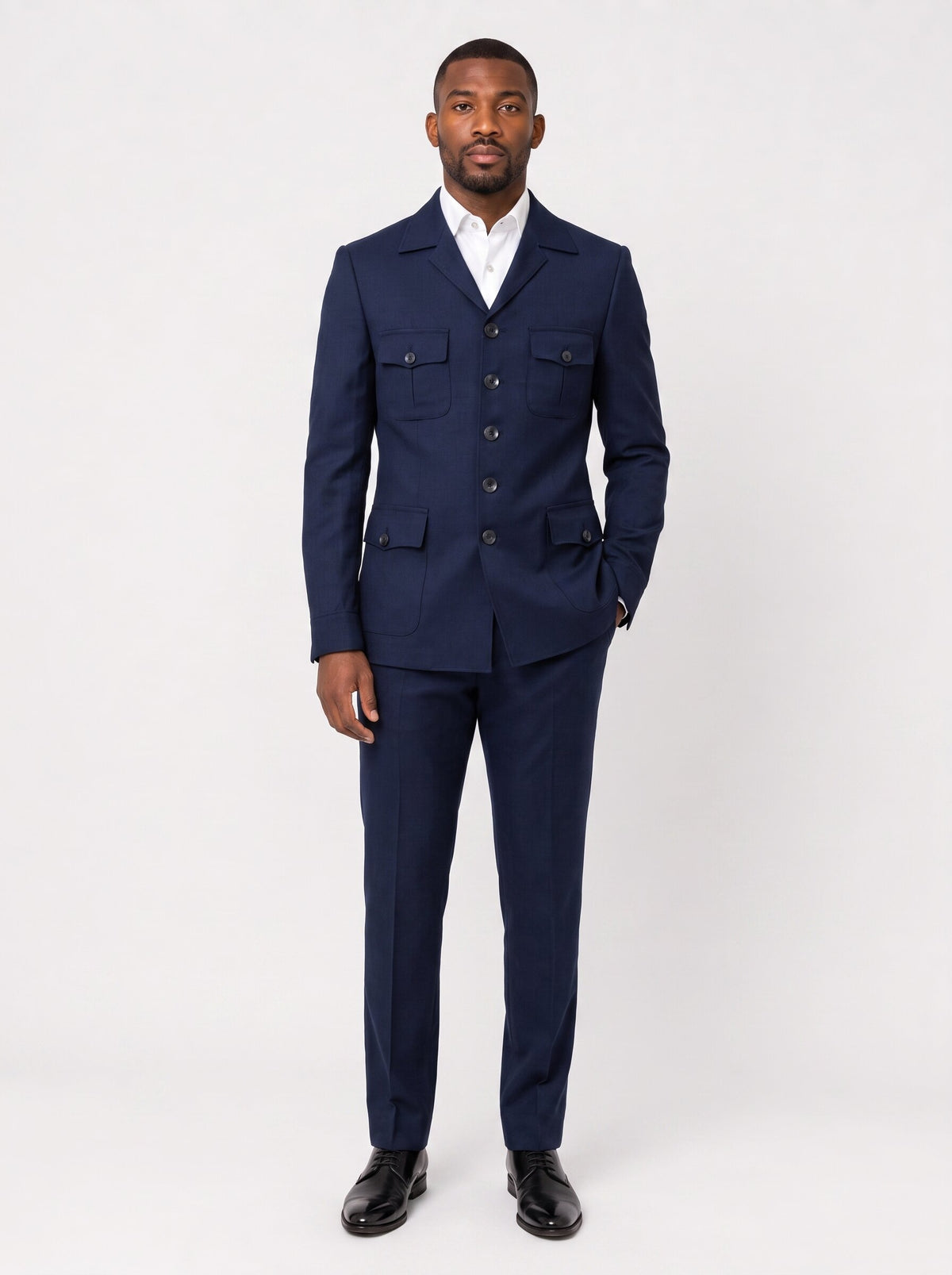
Men’s Safari Suits: Tailored Style With Practical Detail
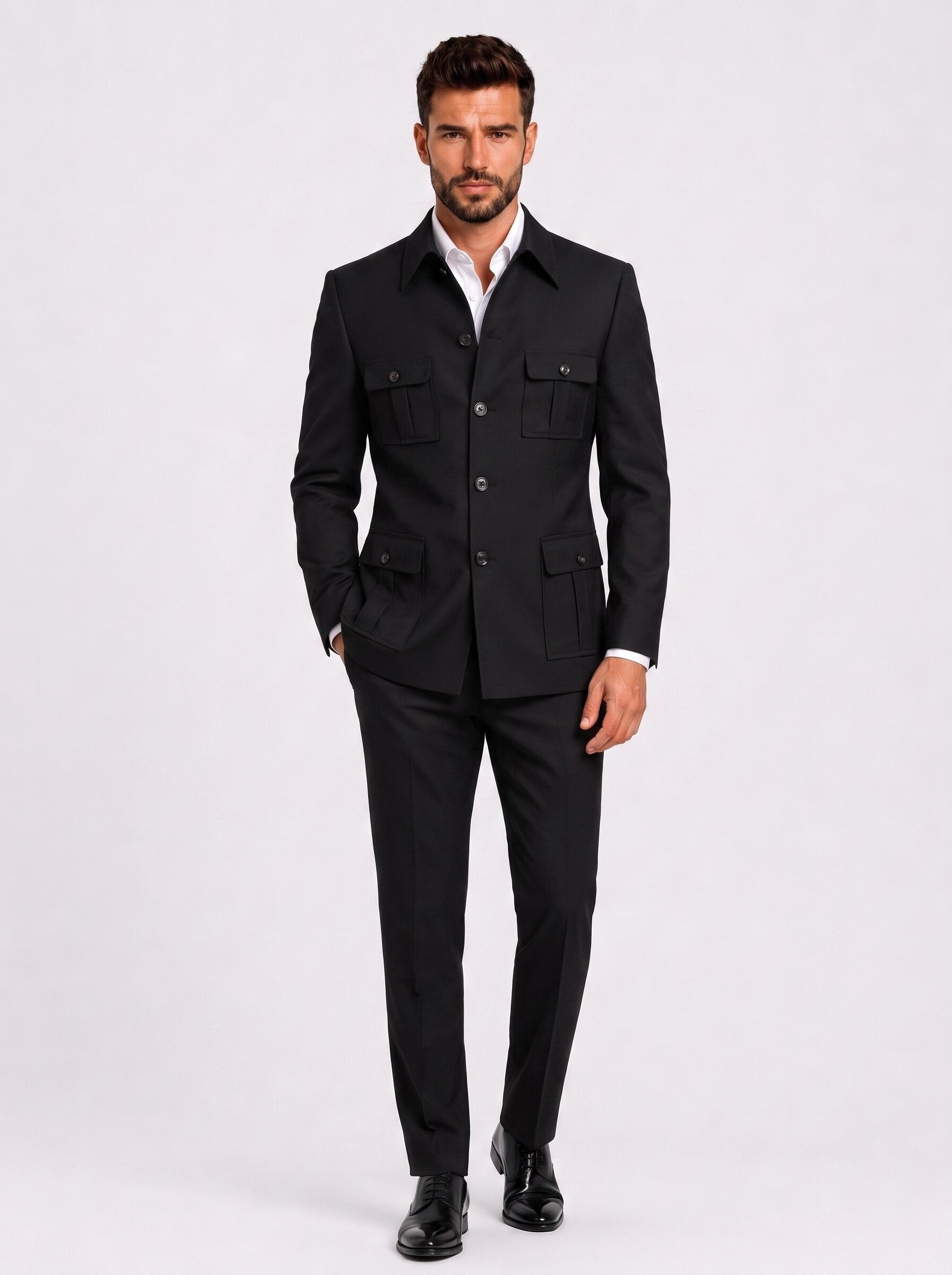
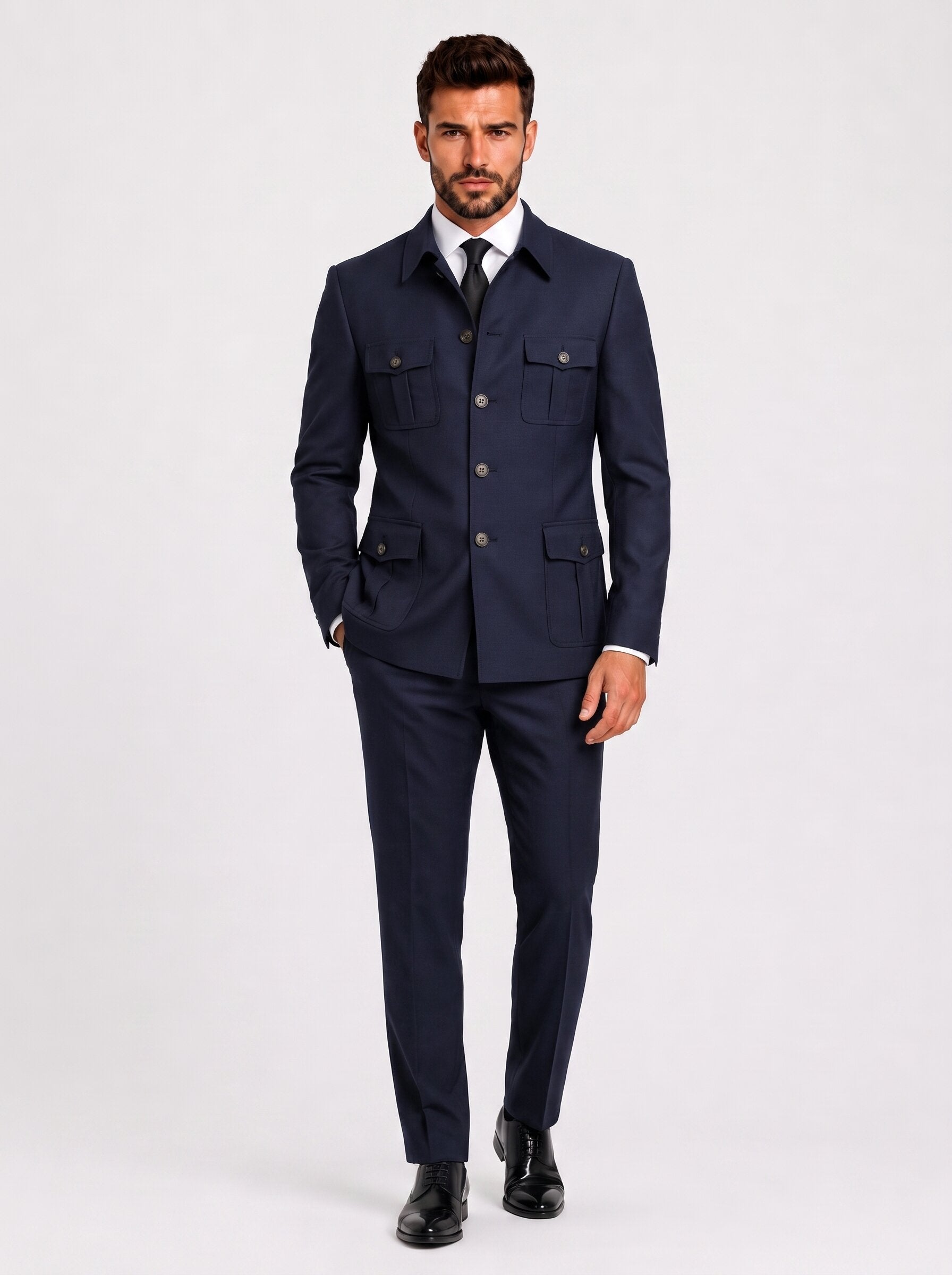
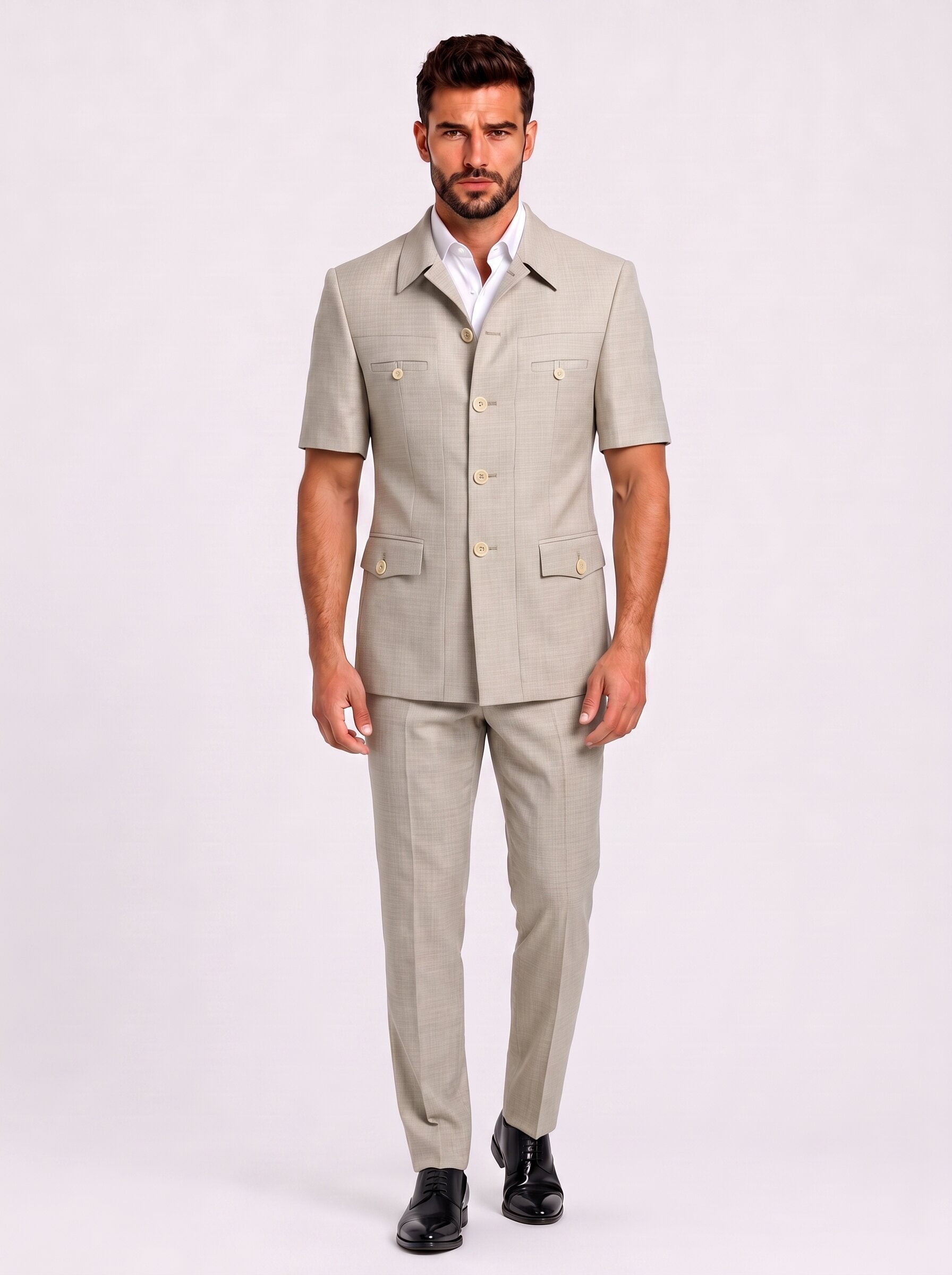
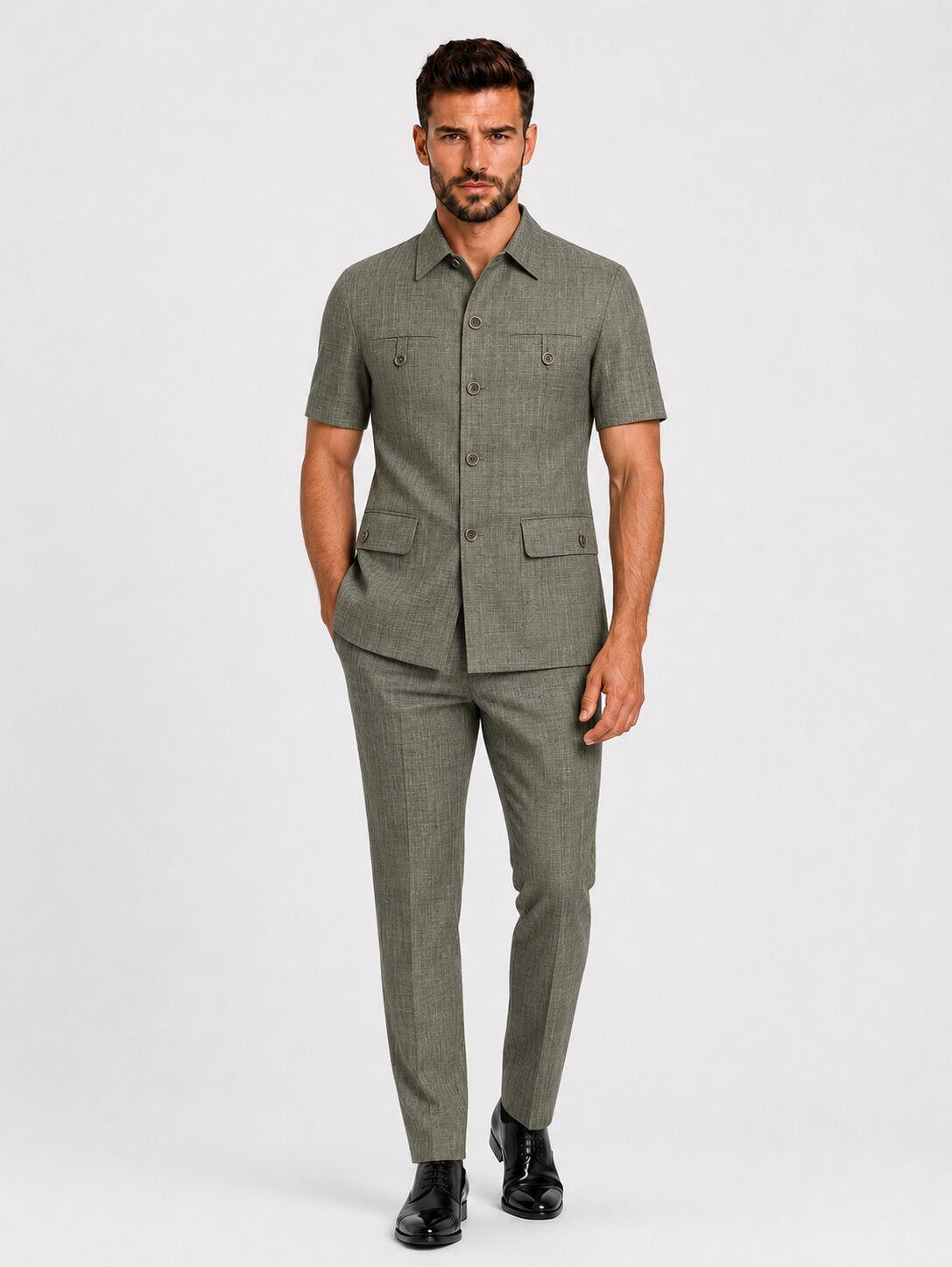
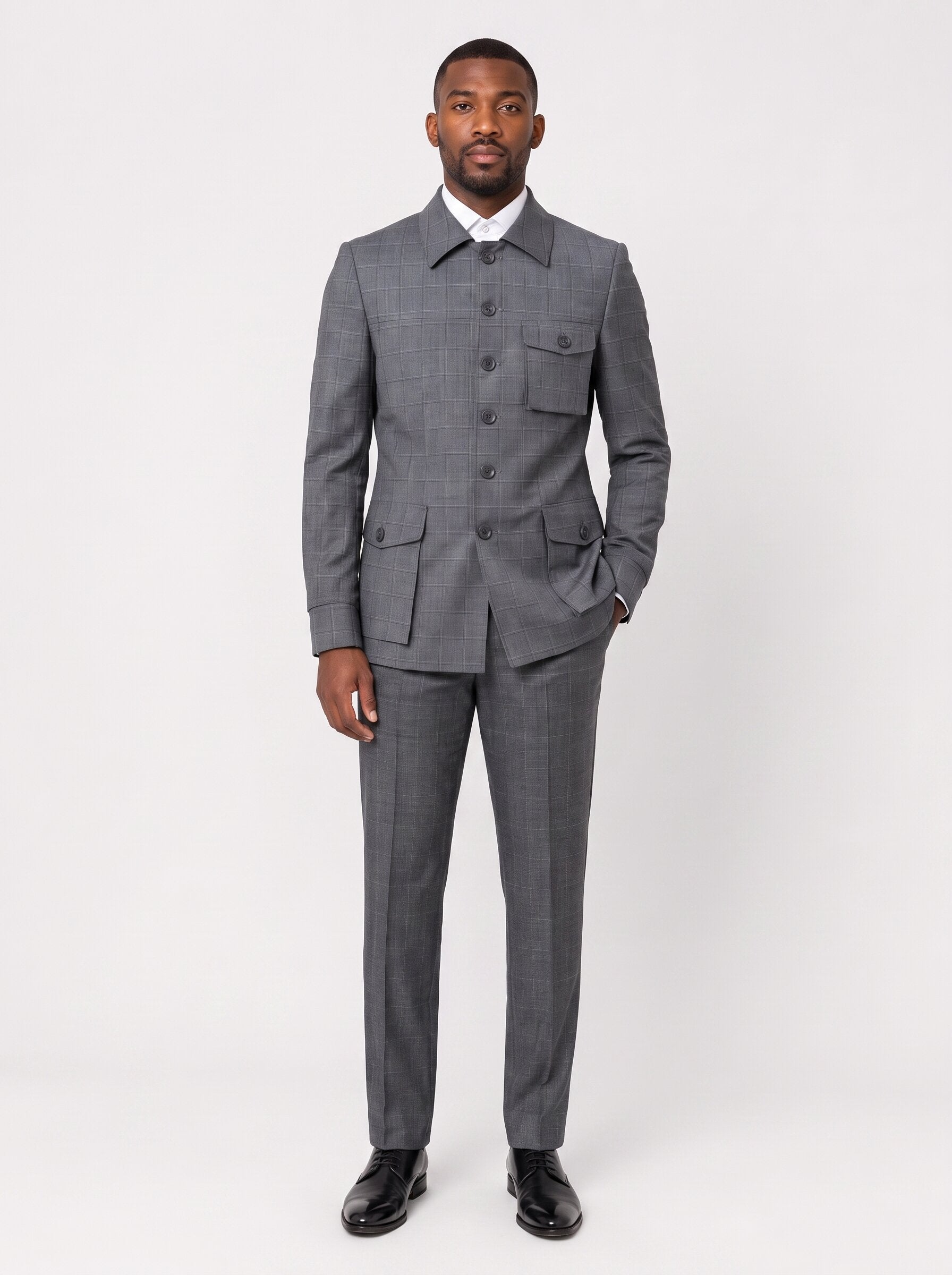
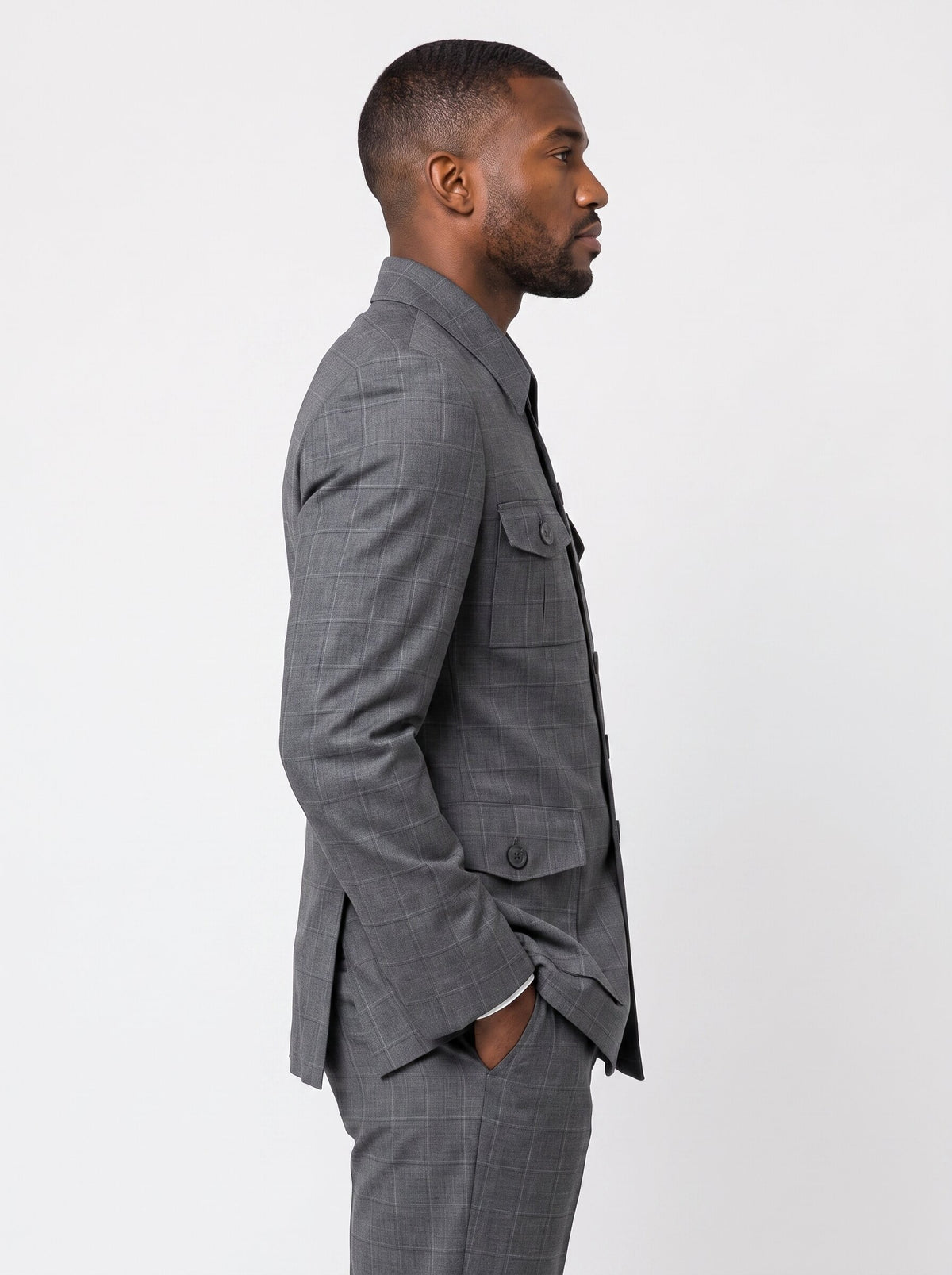
A safari suit sits between a traditional suit and a utility jacket set. It usually pairs a button-front safari jacket with matching trousers, replacing the standard two-button blazer with patch pockets, flap pockets, a higher button stance or a distinctive collar. This collection includes men’s two-piece safari suits in long- and short-sleeve designs, from solid navy and olive green to pinstripe and windowpane patterns.
These are tailored outfits for weddings, parties, travel, dinners and smart-casual events—not costumes or technical clothing for a game drive.
Are Safari Suits Still in Style?
Yes, but the modern versions look different from the boxy safari suits associated with the 1970s. Cleaner pockets, quieter buttons and a more controlled fit make today’s safari suit easier to wear. Navy, charcoal and subtle checked fabrics also move the style closer to contemporary tailoring.
A well-cut men’s safari suit works because it offers something a regular business suit does not: a structured appearance with more visible detail and a slightly less conventional attitude. The key is choosing a cut that follows the shoulders and chest without pulling across the pockets.
How Do You Wear a Safari Suit Without Looking Like a Costume?
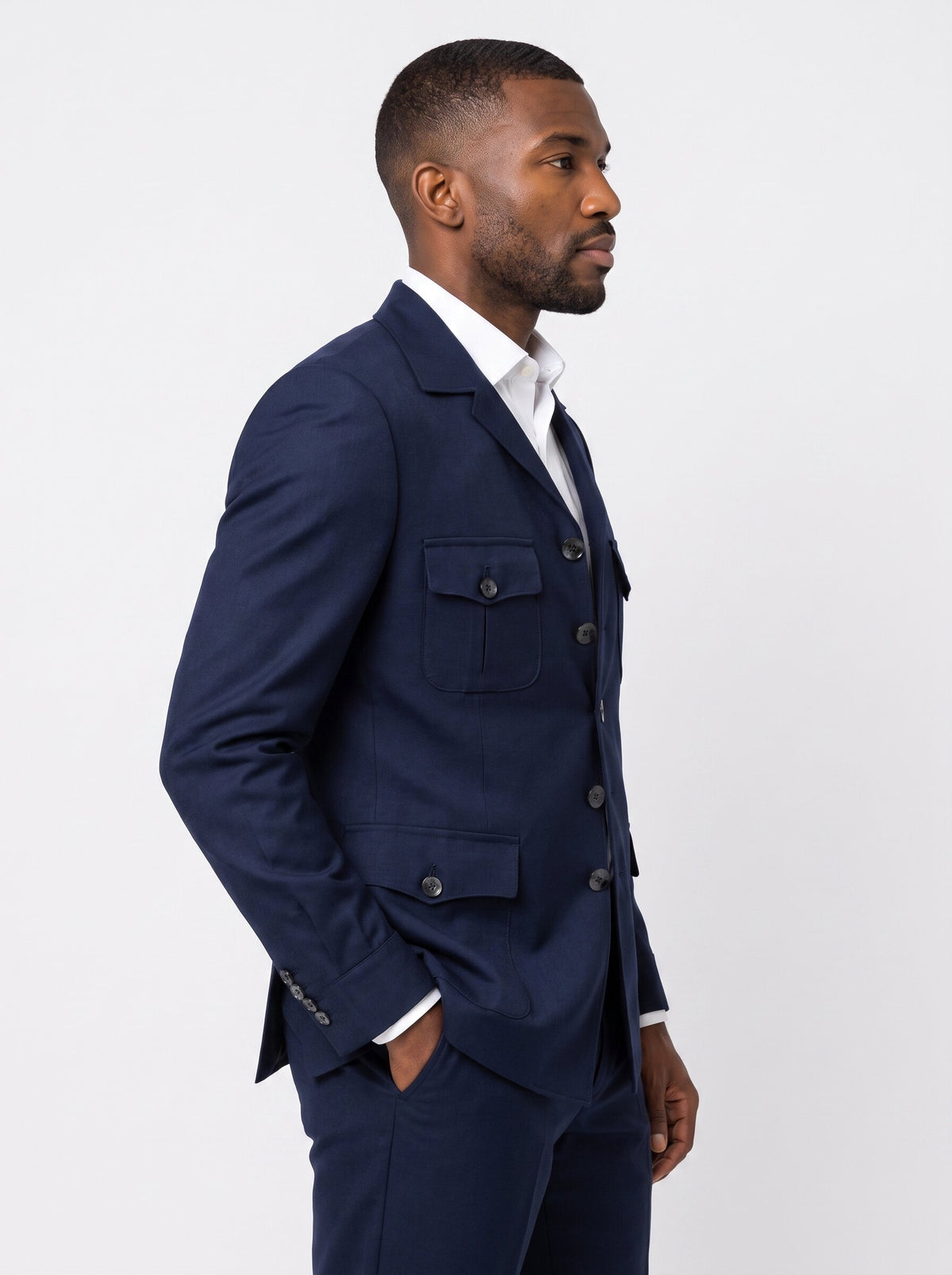
Keep the rest of the outfit simple. A safari jacket already has enough character, especially when it includes four flap pockets, a high button front or shoulder details. It does not need a bush hat, combat boots or other explorer-inspired accessories.
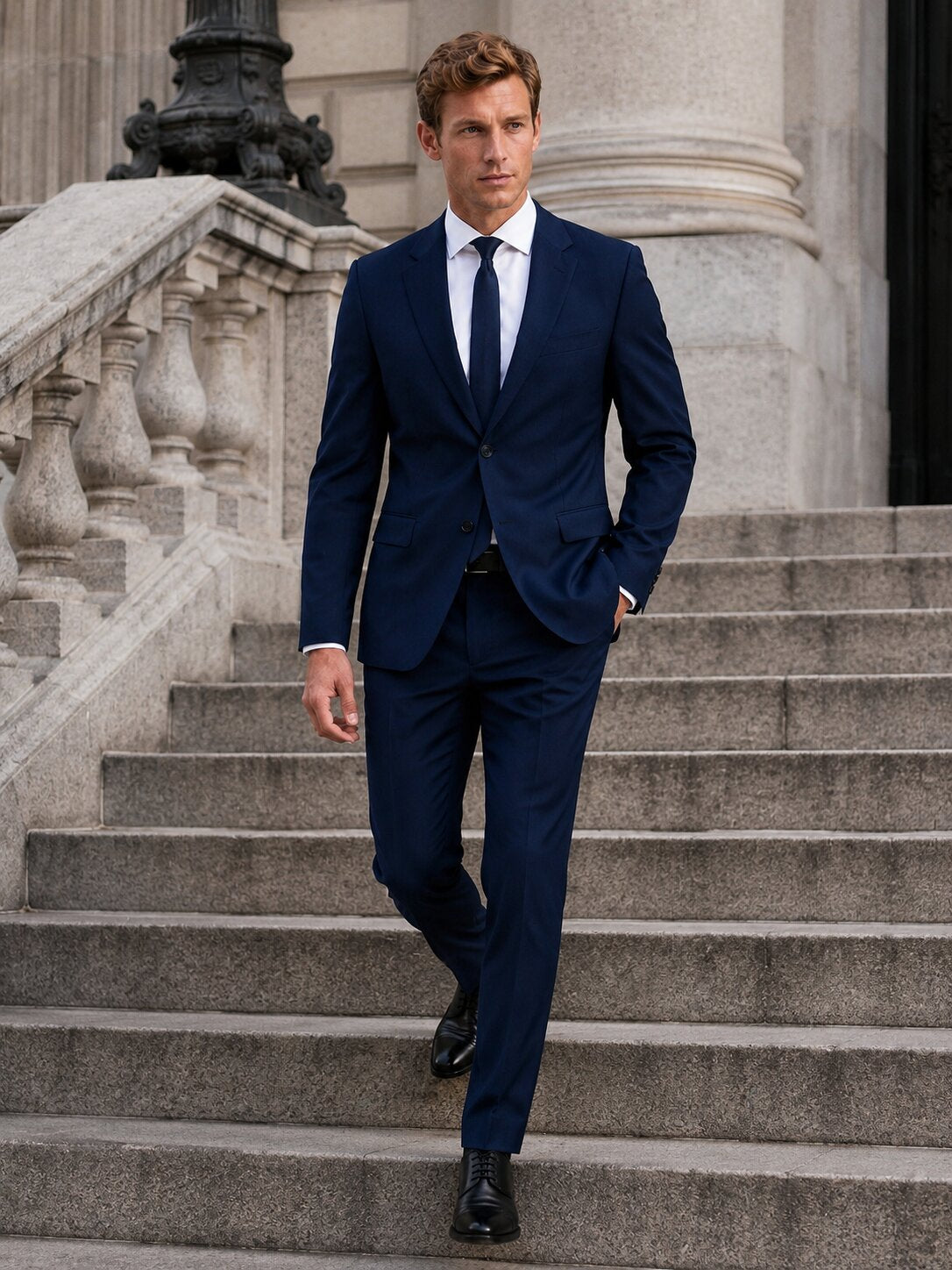
For a clean modern outfit, wear a safari jacket and pants set with a white, cream or pale blue shirt. Finish it with loafers, derbies or polished leather dress shoes. A plain shirt usually works better than a loud print, and one restrained accessory—a watch, pocket square or lapel pin—is enough.
Can You Wear a Safari Suit to a Wedding?
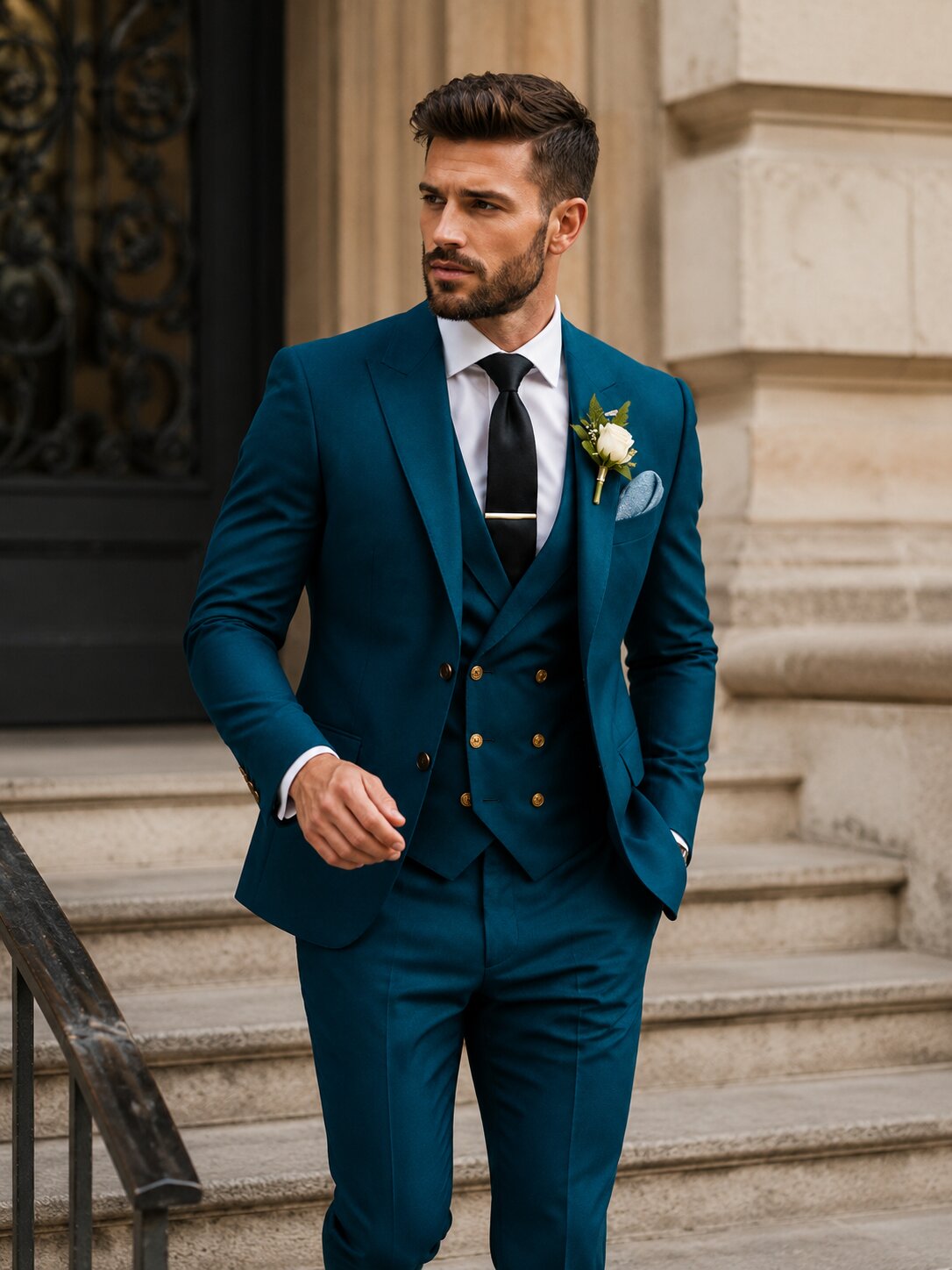
A safari suit can work well for an outdoor, destination, beach, garden or cultural wedding. A navy or charcoal long-sleeve safari suit gives the outfit a more formal direction, while khaki, cream and olive green are well suited to daytime and warm-weather ceremonies.
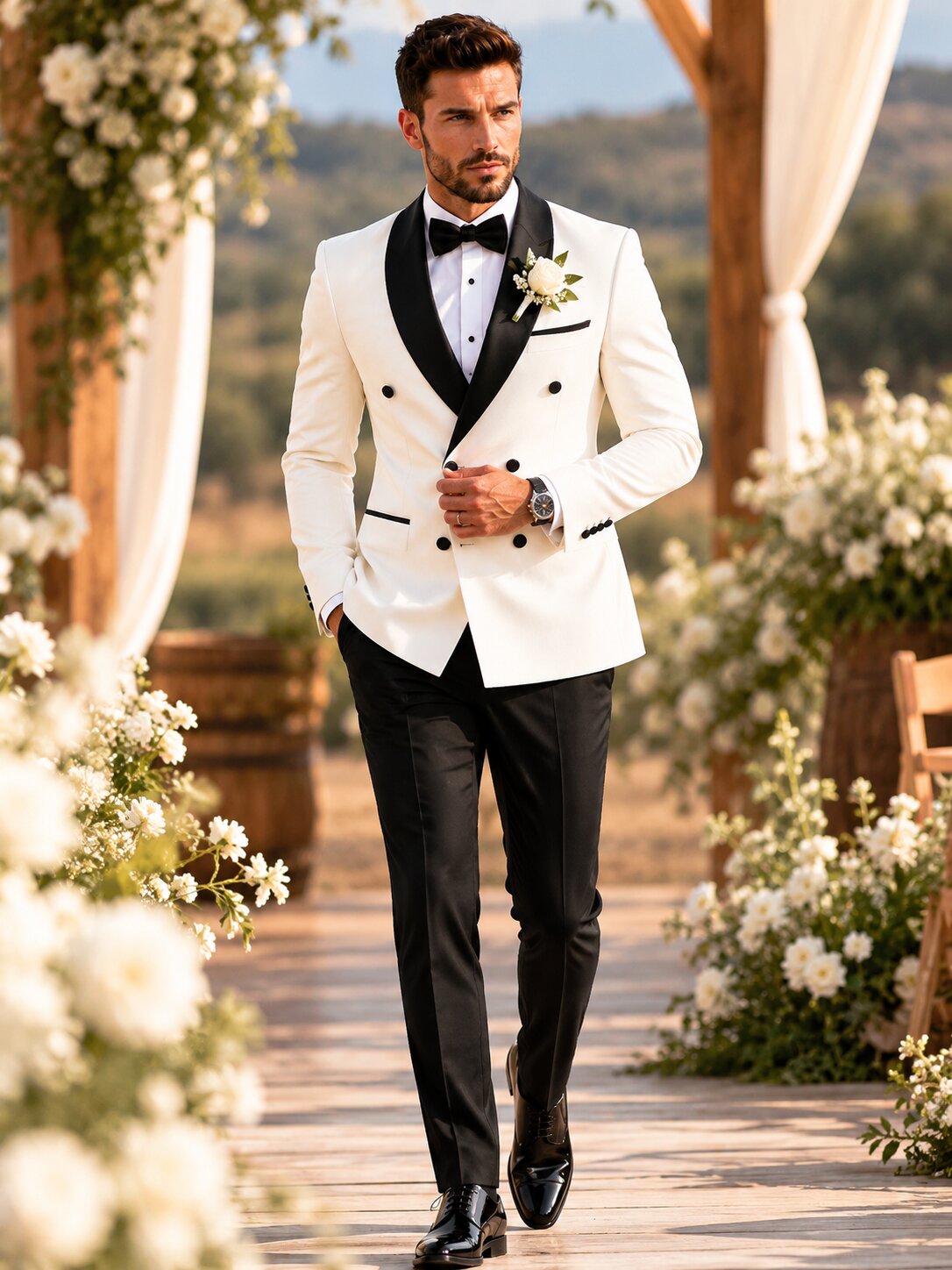
For a groom who wants an alternative to a standard tuxedo, a tailored safari-style wedding suit creates a distinctive look without relying on rhinestones or heavy decoration. Wedding guests can wear one as well, provided the color does not conflict with the couple’s requested dress code.
A safari suit is not a substitute for a tuxedo when the invitation specifically says Black Tie or White Tie.
What Should You Wear With a Safari Suit?
The right shirt and shoes depend on the setting:
- For weddings, receptions and formal dinners, choose a crisp dress shirt with loafers, derbies or oxfords.
- For parties and smart-casual events, wear an open-collar shirt with loafers or clean leather shoes.
- For resort wear and daytime gatherings, a lightweight shirt in white, ivory or another neutral shade keeps the outfit relaxed.
- With a pinstripe or windowpane safari suit, use a solid shirt so the patterns do not compete.
- With a solid navy, gray or black safari suit, a subtly textured shirt can add contrast.
A tie is optional for most safari suits. It works best with jackets that have a notch lapel or conventional pointed collar. Styles with a Nehru or bandhgala collar should normally be worn without one.
Short-Sleeve or Long-Sleeve Safari Suit?
Choose a men’s short-sleeve safari suit for summer parties, resort events, warm-weather travel and relaxed daytime occasions. The shorter sleeve makes the outfit feel less formal and works best with an open collar.
A men’s long-sleeve safari suit is more versatile for weddings, evening events, business-casual settings and cooler seasons. It also offers more room for formal styling with a dress shirt, tie or lapel accessory.
If you are buying one safari suit for several different occasions, the long-sleeve version is usually the safer choice. If comfort in hot weather is the main concern, start with a short-sleeve two-piece safari suit.
What Color Safari Suit Is Most Versatile?
Navy blue is the easiest color to wear across weddings, dinners, travel and smart-casual events. It pairs naturally with white, light blue, cream and gray shirts, as well as black or brown footwear.
Charcoal gray is another flexible option, especially for evening events. Khaki and olive green deliver a more traditional safari look, while white, ivory and cream are better suited to grooms, destination weddings and celebration wear. A black safari suit creates a sharper evening look but can feel heavier for daytime events in warm weather.
Men who already own several solid suits can consider a pinstripe or windowpane safari suit for more visual character.
Are Safari Suit Pockets Functional or Decorative?
Pocket construction depends on the individual design. Many safari suits use genuine patch or flap pockets, while some tailored pockets may arrive temporarily stitched closed to help the jacket keep its shape during shipping. Temporary stitching should be carefully snipped rather than pulled.
Avoid placing bulky objects in the outer pockets, even when they are functional. A phone, wallet or set of keys can distort the front of a fitted jacket. Small, lightweight items are less likely to affect the silhouette. Check the individual product details if functional pocket space is important to you.
Find the Right Safari Suit for Your Occasion
Choose from men’s long-sleeve and short-sleeve safari suits, two-piece jacket-and-trouser sets, four-pocket utility designs, solid colors, pinstripes and windowpane patterns. Whether you need a formal safari suit for a wedding, a navy safari suit for dinner or a relaxed short-sleeve set for a summer event, start with the occasion, then compare the collar, sleeve length, pocket layout and color.